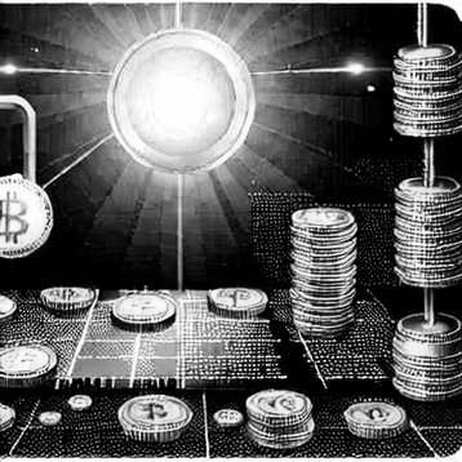
The numbers are out again. Tether’s latest attestation report—prepared by a Cayman Islands firm—shows $86 billion in reserves. Commercial paper? Down to zero. U.S. Treasuries? $72 billion. Cash and bank deposits? $3.8 billion. The headlines will scream “cleanest balance sheet ever.” Ignore them. Watch the flow, not the noise.
Let me rewind. I’ve been auditing liquidity cycles since 2017. Back then, I liquidated 70% of my portfolio before the ICO crackdown because the tokenomics were propped on vapor. Same lesson: when an asset’s stability depends on a single counterparty’s ability to redeem, you don’t trust the attestation—you trust the order book. Tether’s $86 billion is a system-wide leverage point. If redemption pressure spikes, where does the liquidity come from? Treasuries can be sold, but at what slippage? Bank deposits can be frozen, as we saw with Silvergate.
The Context: Stablecoin Market Structure
The stablecoin market is a two-tier game. USDT dominates 70% of on-chain volume, yet its reserves have never faced a truly independent audit—only “attestations” from firms that avoid forward-looking statements. Circle’s USDC, at 20%, publishes monthly reports from Deloitte, but those also stop short of full audits. The remaining 10% is fragmented among DAI, FDUSD, and newer entrants. The crypto ecosystem claims to be decentralized, but the dollar-pegged backbone rests on bank accounts and treasury bills held by a handful of entities.
Why does this matter now? Because the macro backdrop has shifted. With the Fed cutting rates in 2024-2025, yield-hungry capital flooded into stablecoin farming protocols offering 15-20% APY—yields that were “traps, not gifts.” Those yields came from lending USDT to leveraged traders and then re-lending the deposits into DeFi money markets. When the market turned in late 2025, cascading liquidations exposed the fragility.
The Core Analysis: Reserve Quality and Systemic Leverage
Let me quantify the risk. Tether’s reserves are 84% U.S. Treasuries and cash equivalents. That’s high quality, but listen: Treasuries are not cash. They lose value when yields rise. In a risk-off scenario, if USDT demand surges (as it does during selloffs), Tether might need to sell Treasuries at a discount. The spread between bid and ask for a $72 billion position is not trivial—call it 50-100 basis points in a crisis. That’s $360-$720 million in potential losses. Tether’s profits have covered that historically, but profit margins are thinning as competition from USDC and yield-bearing stablecoins erodes fee revenue.
Furthermore, look at the composition of the remainder: $3.8 billion in cash and bank deposits. BNY Mellon is the primary custodian, but that’s a single point of failure. If regulators decide to freeze Tether’s accounts—as they did with Bitfinex’s accounts in 2017—the entire stablecoin ecosystem would freeze. The U.S. Treasury’s Office of Foreign Assets Control now has a crypto unit. The risk is real.
Behind the numbers lies the deeper problem: Tether’s profits come from reinvesting customer deposits into low-risk assets. That’s a bank model without a banking license. In traditional finance, banks reserve 10% of deposits; Tether holds 100% reserves—but in illiquid form. The maturity mismatch is the trap. When everyone wants their dollars back at once, the Treasury holdings become a liquidity bottleneck.
The Contrarian Angle: Decoupling from the Dollar Myth
Here’s what the market misses. The narrative is that stablecoins are “digital dollars” that will eventually replace fiat rails. But the data shows the opposite: stablecoins are ultra-sensitive to dollar liquidity. When the DXY strengthens, USDT market cap tends to fall. When the DXY weakens, USDT market cap rises. That’s not independence; it’s a derivative. The crypto market’s decoupling thesis—that digital assets will rally regardless of dollar strength—only holds if stablecoins become truly autonomous, backed by something other than dollars.
Enter algorithmic stablecoins. Terra’s collapse in 2022 was a warning, but the industry learned nothing. New “yield-bearing” stablecoins like Ethena’s USDe are gaining traction, backed by delta-neutral positions—essentially leveraging the same arbitrage that caused Terra to implode. The macro irony: institutional players are pushing for “real-asset” backed stablecoins, but those are just repackaged Treasuries. The only truly decentralized stablecoin is DAI, but its backing is a mix of ETH, USDC, and RWA—still a fragile web.
Consider the hedge fund play. In 2024, my fund ran a macro hedge: short USDT via perpetual futures (using its implied funding as a proxy) and long a basket of infrastructure tokens (L2 ZK-rollups, decentralized compute). The logic: stablecoin risk is systemic, but the underlying blockchain infrastructure is becoming more robust. We netted 12% annualized, not because we predicted a collapse, but because we priced in the tail risk that everyone else ignored. The risk premium on USDT is negative—investors are being paid to take on counterparty risk, not the other way around.
The Takeaway: Position for the Liquidity Squeeze
Where does this leave the cycle? Bull markets amplify stablecoin demand, but they also amplify the fragility of the reserves. Watch Tether’s commercial paper (now zero, but that could reverse) and the discount of USDT on DeFi lending protocols. A sudden premium above $1.01 signals a flight to safety; a discount below $0.997 signals redemption pressure. I’m monitoring the latter.
My call: reduce exposure to DeFi protocols that depend on USDT as collateral. Favor USDC and DAI. And diversify into non-stablecoin assets—bitcoin and ETH, yes, but also AI-crypto tokens that have real demand for decentralized compute. The bull market mask will slip when the next macro shock hits. When it does, the first domino will be a stablecoin that cannot settle fast enough.
As I tell my LPs: speculation peaks when fundamentals peak. Right now, the fundamentals of the stablecoin reserve structure are deteriorating under the weight of their own success. The bubble pops; the fund survives. Watch the flow, ignore the noise.